TL;DR:
Solving Cognitive Overload: Redesigned a fragmented property survey experience into a task-oriented landing page. Through consolidated access and a clear navigational roadmap, I eliminated user disorientation and increased engagement by 70%, proving the value of Information Architecture in driving high-stakes conversions.
The Problem:
The existing user experience for the project's survey and property offerings suffered from significant usability issues, directly impacting engagement and data collection. Users experienced low survey completion rates and expressed frustration with a complicated process and difficulty understanding available options like "buy or rent," "views," "residence type," and "amenities". This was primarily due to a vertically continuous scrolling interface that led to disorientation and severe cognitive overload, making it challenging for users to navigate and absorb critical information. This fragmented experience hindered the collection of essential feedback for developers and obscured the value proposition of the offerings.
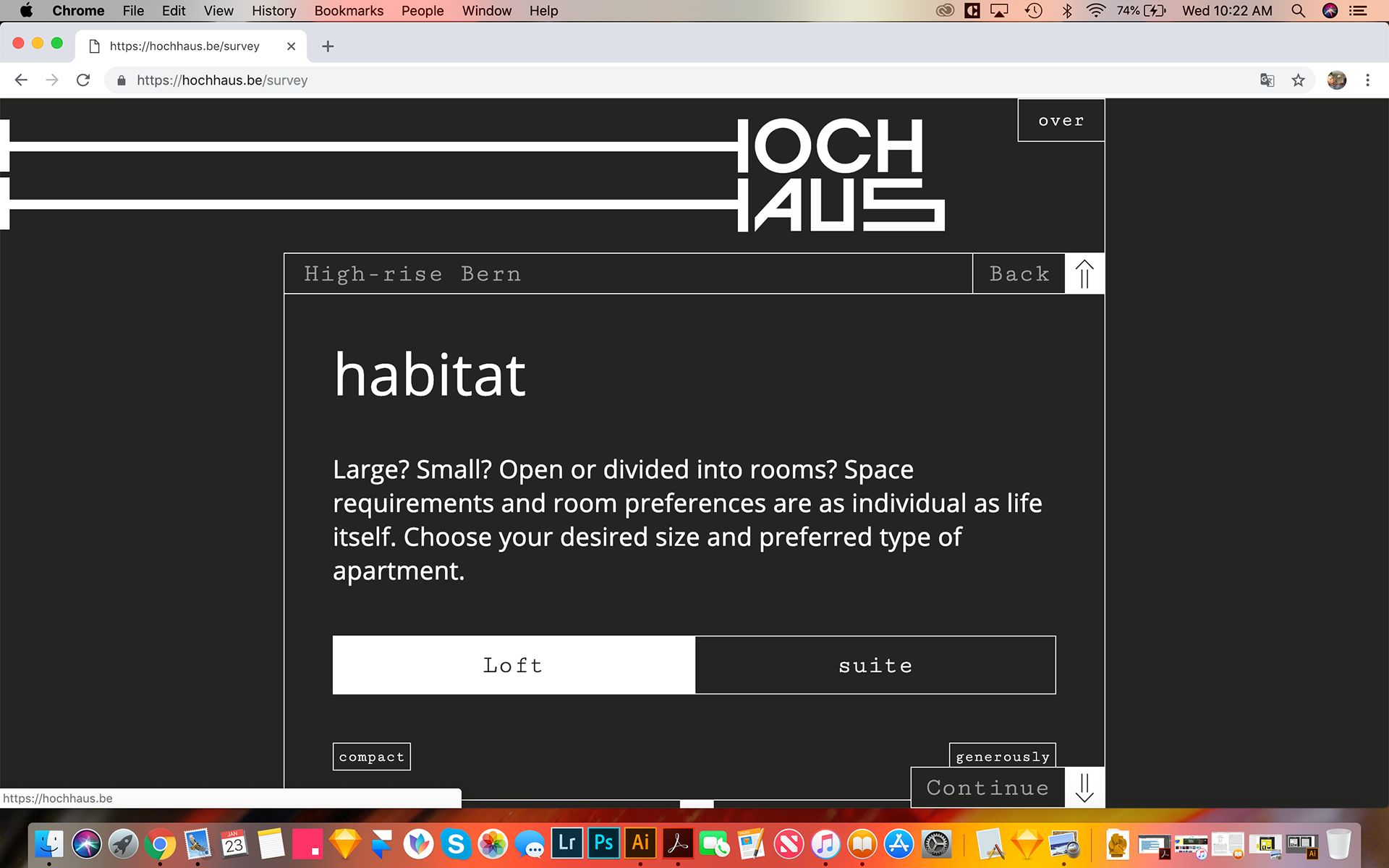
Current Site: A lot of scrolling and not clear path to the User.

Low fidelity suggested solutions
The Solution: Streamlining the User Journey.
To address these challenges and improve conversion, my design focused on simplifying the user experience through strategic interface adjustments:
Consolidated Access: I centralized key development information and the survey on a single, intuitive landing page, ensuring essential content was immediately accessible without excessive scrolling. This approach reduced friction for all users, whether they were new visitors or returning to access contact details or browse images.
Clear Navigational Roadmap: The introduction of tabbed navigation provided users with a clear, predictable structure, explicitly outlining what was expected at each stage. This eliminated the guesswork of continuous scrolling, offering a guided and more efficient path through the offerings and survey.
Enhanced Feedback & Assurance: Implementing visual highlights upon user interaction (clicks or taps) provided immediate and clear feedback. This subtle but crucial design element assured users that their actions were registered, fostering confidence and enabling a smoother, uninterrupted progression through the experience.
Task-Oriented Focus: By prominently positioning the survey in the center of the page and using a distinct color, I visually prioritized the primary call-to-action. This design choice gave the survey appropriate weight, guiding users directly to the main task at hand and significantly improving the ease with which they could complete it, thereby increasing the likelihood of conversion.
The Result: Better conversion rate.
Through the streamlined, tabbed interface and clear visual guidance, we increased the survey completion rate by 70%. This transformed an initial completion rate that was often below 30% to a significantly more robust performance, ensuring a much higher volume of valuable user feedback for the development team.